

A single boom tunnel drilling rig is a powerful and versatile piece of equipment widely used in tunnel construction, mining, and other underground engineering projects. As a supplier of single boom tunnel drilling rigs, I am excited to share with you the working principle of this remarkable machine.
Overall Structure of a Single Boom Tunnel Drilling Rig
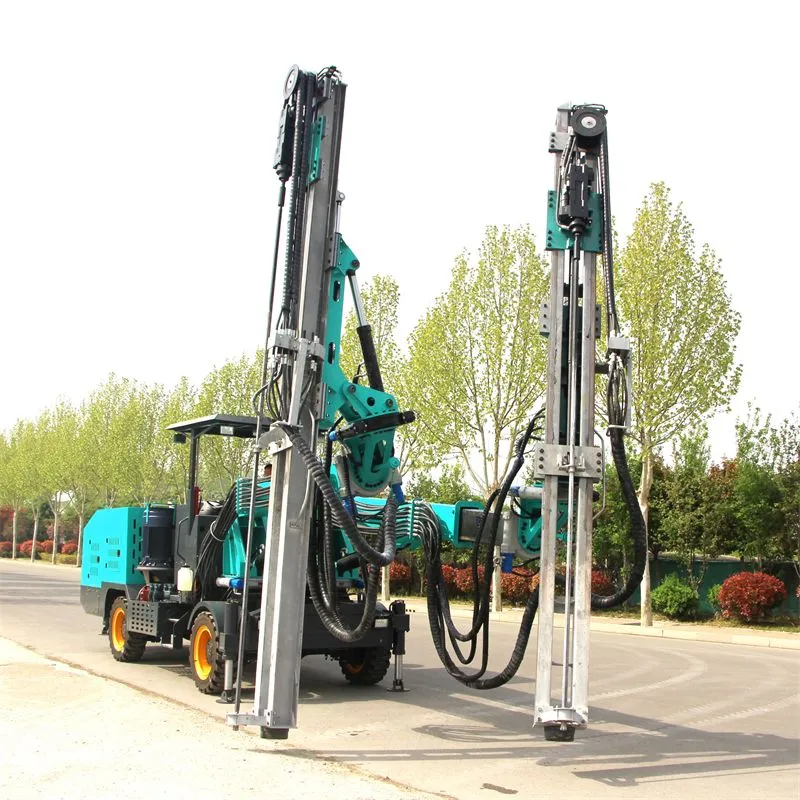
Before delving into the working principle, it's essential to understand the basic structure of a single boom tunnel drilling rig. A typical single boom tunnel drilling rig consists of several key components: the carrier vehicle, the boom system, the drill feed mechanism, the drill bit, and the control system.
The carrier vehicle provides mobility for the drilling rig. It is usually a robust and stable platform that can move around the tunnel site. The boom system is the most distinctive part of the single boom tunnel drilling rig. It is a long, articulated arm that can be extended, retracted, and rotated to position the drill bit at the desired location. The drill feed mechanism is responsible for pushing the drill bit into the rock, while the drill bit itself is designed to break through the hard rock. The control system allows the operator to control the movement of the carrier vehicle, the boom system, and the drill feed mechanism.
Working Principle of the Carrier Vehicle
The carrier vehicle of a single boom tunnel drilling rig is powered by an engine, which can be a diesel engine or an electric motor. The engine provides power to the hydraulic system, which in turn drives the wheels or tracks of the carrier vehicle. The hydraulic system consists of a hydraulic pump, hydraulic cylinders, and hydraulic valves. The hydraulic pump converts the mechanical energy of the engine into hydraulic energy, which is then used to operate the hydraulic cylinders. The hydraulic cylinders are responsible for moving the wheels or tracks, allowing the carrier vehicle to move forward, backward, turn left, or turn right.
The operator can control the movement of the carrier vehicle through the control system. The control system usually includes a joystick or a set of pedals, which the operator can use to control the speed and direction of the carrier vehicle. The control system also provides feedback to the operator, such as the speed of the carrier vehicle, the position of the boom system, and the pressure of the hydraulic system.
Working Principle of the Boom System
The boom system of a single boom tunnel drilling rig is a complex mechanical structure that allows the drill bit to reach different positions in the tunnel. The boom system consists of several sections, which are connected by joints. Each joint can be rotated or extended, allowing the boom system to be adjusted to the desired position.
The movement of the boom system is also controlled by the hydraulic system. The hydraulic cylinders are installed at each joint of the boom system, and they can be extended or retracted to move the boom system. The operator can control the movement of the boom system through the control system. The control system allows the operator to adjust the length, angle, and position of the boom system, ensuring that the drill bit can reach the target location accurately.
Working Principle of the Drill Feed Mechanism
The drill feed mechanism is responsible for pushing the drill bit into the rock. It consists of a drill rod, a drill chuck, and a feed cylinder. The drill rod is a long, hollow tube that is connected to the drill bit. The drill chuck is used to hold the drill rod firmly, while the feed cylinder is used to push the drill rod forward.
The drill feed mechanism is also powered by the hydraulic system. The hydraulic pump provides hydraulic pressure to the feed cylinder, which then pushes the drill rod forward. The operator can control the speed and feed force of the drill rod through the control system. The control system allows the operator to adjust the feed speed and feed force according to the hardness of the rock and the drilling requirements.
Working Principle of the Drill Bit
The drill bit is the most important part of the single boom tunnel drilling rig. It is responsible for breaking through the hard rock. The drill bit is usually made of high - strength alloy steel and is equipped with cutting teeth. The cutting teeth are designed to cut into the rock and break it into small pieces.

When the drill bit rotates, the cutting teeth come into contact with the rock surface. The rotation of the drill bit and the feed force of the drill rod cause the cutting teeth to penetrate the rock. As the drill bit continues to rotate and move forward, the rock is gradually broken into small pieces, which are then removed from the drilling hole by the flushing fluid.
The flushing fluid is usually water or air. It is injected into the drilling hole through the drill rod. The flushing fluid helps to cool the drill bit, remove the rock chips, and prevent the drill bit from getting stuck in the rock.
Control System and Automation
The control system of a single boom tunnel drilling rig plays a crucial role in ensuring the efficient and safe operation of the machine. Modern single boom tunnel drilling rigs are often equipped with advanced control systems that can automate many of the drilling processes.
The control system can monitor and adjust various parameters, such as the speed of the carrier vehicle, the position of the boom system, the feed speed and force of the drill rod, and the rotation speed of the drill bit. It can also provide real - time feedback to the operator, allowing the operator to make timely adjustments.
Some single boom tunnel drilling rigs are even equipped with computer - controlled automation systems. These systems can use sensors and algorithms to optimize the drilling process. For example, they can automatically adjust the feed speed and force according to the hardness of the rock, or they can use laser sensors to accurately position the drill bit.
Applications and Advantages
Single boom tunnel drilling rigs are widely used in various underground engineering projects, such as tunnel construction, mining, and water conservancy projects. They are particularly suitable for small - to medium - sized tunnels, where the space is limited.
One of the main advantages of single boom tunnel drilling rigs is their flexibility. The boom system can be easily adjusted to reach different positions in the tunnel, allowing for precise drilling. They are also relatively easy to operate and maintain, which reduces the labor cost and downtime.
In addition, single boom tunnel drilling rigs are more cost - effective compared to multi - boom tunnel drilling rigs. They require less investment in equipment and maintenance, making them a popular choice for small - and medium - sized construction companies.
Conclusion
In conclusion, the working principle of a single boom tunnel drilling rig is based on the combination of mechanical, hydraulic, and control systems. The carrier vehicle provides mobility, the boom system positions the drill bit, the drill feed mechanism pushes the drill bit into the rock, and the drill bit breaks through the hard rock. The control system ensures the efficient and safe operation of the machine.
If you are interested in our Single Boom Tunnel Drilling Rig, Single Boom Tunnel Drilling Rig Jumbo, or other related products such as Small Tunnel Drilling Rig, Two Boom Tunnel Jumbo Drill, and Specialized Tunnel Rock Bolting Rig, please feel free to contact us for more information and to discuss your specific requirements. We are committed to providing high - quality products and excellent service to meet your needs.
References
- Smith, J. (2018). Tunnel Drilling Technology. London: Engineering Press.
- Johnson, A. (2019). Hydraulic Systems in Construction Equipment. New York: Machinery Publishing.
- Brown, K. (2020). Automation in Underground Drilling. Sydney: Mining Journal Publications.