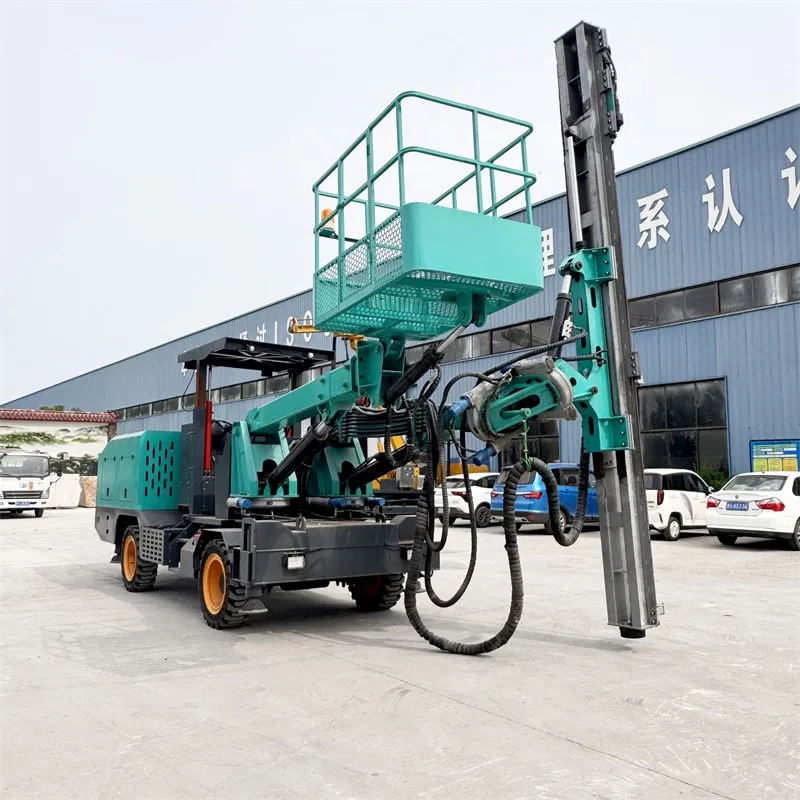
Core Performance Parameters
The pneumatic rock bolter acts as the "Pangolin" of the mine; its operational prowess hinges entirely on these key technical specifications:
Power Output: Typically driven by an air pressure of 0.8–1.2 MPa, achieving rotational speeds of 200–400 rpm.
Drilling Capacity: Effortlessly penetrates rock strata with a hardness factor of f ≤ 8, reaching a maximum drilling depth of up to 30 meters.
Weight Control: The complete unit typically weighs between 25 and 40 kg, allowing for single-person operation.
Air Consumption: Consumes 3–5 cubic meters of compressed air per minute.
The Three Pillars of Performance Requirements
A superior pneumatic rock bolter must perform like a special forces operative, meeting the most rigorous operational demands:
Stability: Maintains precise alignment of the drill rod-without deviation-even when operating in inclined mine roadways.
Durability: Critical components must possess a service life exceeding 2,000 hours.
Safety: Equipped with a dual-redundancy mechanism to prevent drill-jamming.
Compared to other types of drilling equipment, the pneumatic model boasts these unique "signature capabilities":
Water-Resistant: Its fully pneumatic architecture ensures superior reliability in damp or wet environments.
Instant Start/Stop: Pneumatic control response times are three times faster than those of electric-powered units.
Explosion-Proof: Generates no hazardous sparks during operation, ensuring safety in explosive atmospheres.
Simplified Maintenance: Lacking complex electrical circuitry, it boasts a 60% lower failure rate.