

What is the vibration level of a Highway Guardrail Piling Machine?
As a supplier of Highway Guardrail Piling Machines, I often get asked about the vibration levels of these machines. Understanding the vibration level is crucial for several reasons, including the machine's performance, the safety of the operators, and the impact on the surrounding environment. In this blog post, I will delve into the details of the vibration level of a Highway Guardrail Piling Machine, exploring its significance, factors affecting it, and how it relates to the overall operation of the machine.
The Significance of Vibration Level
The vibration level of a Highway Guardrail Piling Machine plays a vital role in its functionality. When the machine is in operation, it generates vibrations as it drives the guardrail piles into the ground. These vibrations are essential for the efficient installation of the guardrails, as they help to penetrate the soil and secure the piles firmly in place. However, excessive vibration can also have negative consequences.
Excessive vibration can cause discomfort and fatigue to the machine operators, leading to reduced productivity and potential health issues over time. Moreover, it can also affect the stability of the machine itself, potentially causing damage to its components and reducing its lifespan. Additionally, high levels of vibration can have an impact on the surrounding environment, such as causing disruptions to nearby structures or disturbing wildlife.
Factors Affecting the Vibration Level
Several factors can influence the vibration level of a Highway Guardrail Piling Machine. These factors include the type of machine, the soil conditions, the pile size and material, and the operating parameters.
- Type of Machine: Different types of Highway Guardrail Piling Machines have different vibration characteristics. For example, hydraulic pile drivers tend to produce less vibration compared to diesel pile drivers. This is because hydraulic pile drivers use hydraulic power to drive the piles, which results in a smoother and more controlled operation.
- Soil Conditions: The type and properties of the soil also play a significant role in determining the vibration level. Harder soils require more force to penetrate, which can result in higher vibration levels. Conversely, softer soils may require less force, leading to lower vibration levels.
- Pile Size and Material: The size and material of the piles being driven can also affect the vibration level. Larger and heavier piles generally require more force to drive, which can result in higher vibration levels. Additionally, different materials have different levels of stiffness and damping, which can also influence the vibration characteristics.
- Operating Parameters: The operating parameters of the machine, such as the driving speed, the impact energy, and the frequency of the vibrations, can also have a significant impact on the vibration level. Adjusting these parameters can help to optimize the vibration level and ensure efficient and safe operation.
Measuring and Controlling Vibration Level
To ensure the safe and efficient operation of a Highway Guardrail Piling Machine, it is important to measure and control the vibration level. There are several methods available for measuring the vibration level, including using accelerometers and vibration sensors. These devices can provide accurate measurements of the vibration amplitude, frequency, and acceleration, allowing operators to monitor and adjust the machine's operation accordingly.
In addition to measuring the vibration level, it is also important to take steps to control it. This can include using vibration isolation techniques, such as installing rubber pads or springs between the machine and the ground, to reduce the transmission of vibrations. Additionally, operators can adjust the operating parameters of the machine to optimize the vibration level and minimize its impact on the surrounding environment.
Our Highway Guardrail Piling Machines
At our company, we offer a wide range of Highway Guardrail Piling Machines that are designed to meet the needs of different applications. Our machines are equipped with advanced technology and features to ensure efficient and safe operation, including low vibration levels.
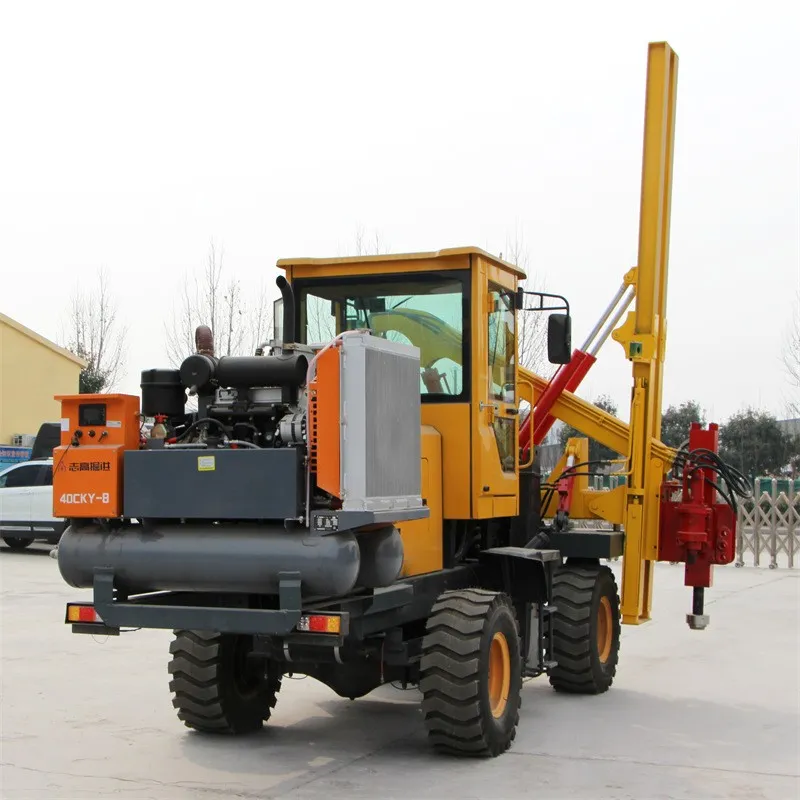
One of our popular products is the Wave Shaped Guardrail Piling Machine. This machine is specifically designed for the installation of wave-shaped guardrails, which are commonly used on highways and expressways. The Wave Shaped Guardrail Piling Machine is equipped with a hydraulic system that provides smooth and controlled operation, resulting in low vibration levels and minimal impact on the surrounding environment.
We also offer the Small Four Wheel Pile Driver, which is a compact and versatile machine suitable for small-scale projects. This machine is easy to operate and transport, making it an ideal choice for contractors and construction companies.

Contact Us for More Information
If you are interested in learning more about our Highway Guardrail Piling Machines or have any questions about the vibration level, please do not hesitate to contact us. Our team of experts is available to provide you with detailed information and assistance, and we can help you choose the right machine for your specific needs.
We are committed to providing high-quality products and excellent customer service, and we look forward to working with you to meet your piling needs. Whether you are a contractor, a construction company, or a government agency, we have the expertise and experience to help you achieve your goals.
References
- ASTM International. (2018). Standard Test Method for Measuring Vibration of Pile Driving Equipment. ASTM D4945 - 18.
- International Organization for Standardization. (2001). Mechanical vibration - Guidelines for the measurement and evaluation of human exposure to whole - body vibration. ISO 2631 - 1:1997.
- Peck, R. B., Hanson, W. E., & Thornburn, T. H. (1974). Foundation Engineering. John Wiley & Sons.