

As a supplier of Crawler Guardrail Piling Machines, I've witnessed firsthand the importance of a machine's adaptability to different soil types. In this blog, I'll delve into how our Crawler Guardrail Piling Machine handles various soil conditions, ensuring efficient and effective piling operations.
Understanding Different Soil Types
Before we discuss how the Crawler Guardrail Piling Machine deals with different soil types, it's essential to understand the characteristics of common soil types.
Sandy Soil
Sandy soil is composed of large particles, which results in good drainage but low cohesion. This type of soil can be easily compacted, but it may also cause the pile to sink or shift during the piling process.
Clay Soil
Clay soil consists of fine particles and has high plasticity and cohesion. It can hold its shape well but may be difficult to penetrate due to its high density. When piling in clay soil, the machine needs to overcome the resistance of the soil.
Loam Soil
Loam soil is a mixture of sand, silt, and clay, offering a balanced combination of drainage and fertility. It is generally easier to pile in loam soil compared to pure sandy or clay soil.
Rocky Soil
Rocky soil contains a significant amount of rocks and boulders, which can pose a great challenge to the piling process. The machine needs to have sufficient power and durability to break through the rocks.
How the Crawler Guardrail Piling Machine Handles Different Soil Types
Adaptable Piling Methods
Our Crawler Guardrail Piling Machine is equipped with multiple piling methods to adapt to different soil conditions. For sandy soil, the machine can use the vibration piling method. The vibration generated by the machine helps to compact the sand around the pile, increasing its stability. The high - frequency vibration reduces the friction between the pile and the soil, allowing the pile to be driven more easily.
In clay soil, the hydraulic hammer piling method is often more effective. The hydraulic hammer delivers a powerful impact force to the pile, which can break through the dense clay layers. The machine's adjustable impact energy allows it to adapt to different clay densities.
For loam soil, a combination of vibration and impact piling can be used. The vibration helps to loosen the soil, while the impact ensures that the pile is driven to the required depth.
When dealing with rocky soil, the machine is equipped with a special rock - breaking attachment. This attachment can break large rocks into smaller pieces, making it easier to drive the pile. The powerful engine of the Crawler Guardrail Piling Machine provides the necessary force to operate the rock - breaking attachment.
Adjustable Parameters
The Crawler Guardrail Piling Machine allows operators to adjust various parameters according to the soil type. For example, the vibration frequency can be adjusted in sandy soil. A higher frequency can be used for loose sand, while a lower frequency may be more suitable for slightly compacted sand.
In clay soil, the impact force of the hydraulic hammer can be adjusted. For soft clay, a lower impact force may be sufficient, while for hard clay, a higher impact force is required.
The machine also has adjustable speed settings. In easy - to - pile soil types like loam, a faster speed can be used to increase efficiency. In more challenging soil types such as rocky soil, a slower speed is necessary to ensure accurate piling and prevent damage to the machine.
Robust Design
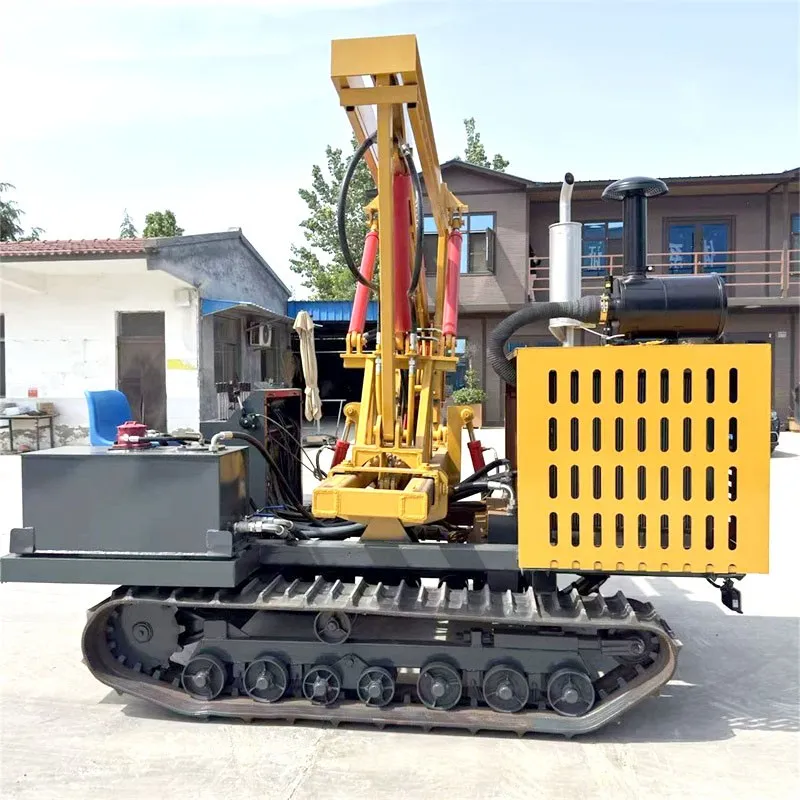
The design of the Crawler Guardrail Piling Machine is robust enough to withstand the challenges posed by different soil types. The crawler chassis provides excellent stability on uneven ground, which is common in areas with different soil conditions. The machine's frame is made of high - strength steel, which can resist the impact and vibration during the piling process.
The piling system is also designed to be durable. The pile driver head is made of wear - resistant materials, ensuring a long service life even when working in abrasive soil types such as sandy soil.
Case Studies
Let's look at some real - world examples of how our Crawler Guardrail Piling Machine has handled different soil types.
In a project in a coastal area with sandy soil, the vibration piling method was used. The machine was able to drive the guardrail piles quickly and efficiently. The adjustable vibration frequency allowed the operator to optimize the piling process according to the sand's density. The project was completed ahead of schedule, and the piles were stable.
In a construction site in an area with clay soil, the hydraulic hammer piling method was employed. The machine's adjustable impact force was crucial in breaking through the dense clay layers. The piles were driven to the required depth, and the project met all the safety and quality standards.
In a mountainous area with rocky soil, the rock - breaking attachment of the Crawler Guardrail Piling Machine was put to use. The machine was able to break the large rocks and drive the piles, despite the challenging conditions.
Conclusion
Our Crawler Guardrail Piling Machine is a versatile and reliable solution for piling in different soil types. Its adaptable piling methods, adjustable parameters, and robust design make it suitable for a wide range of projects. Whether you are dealing with sandy, clay, loam, or rocky soil, our machine can handle the task efficiently and effectively.
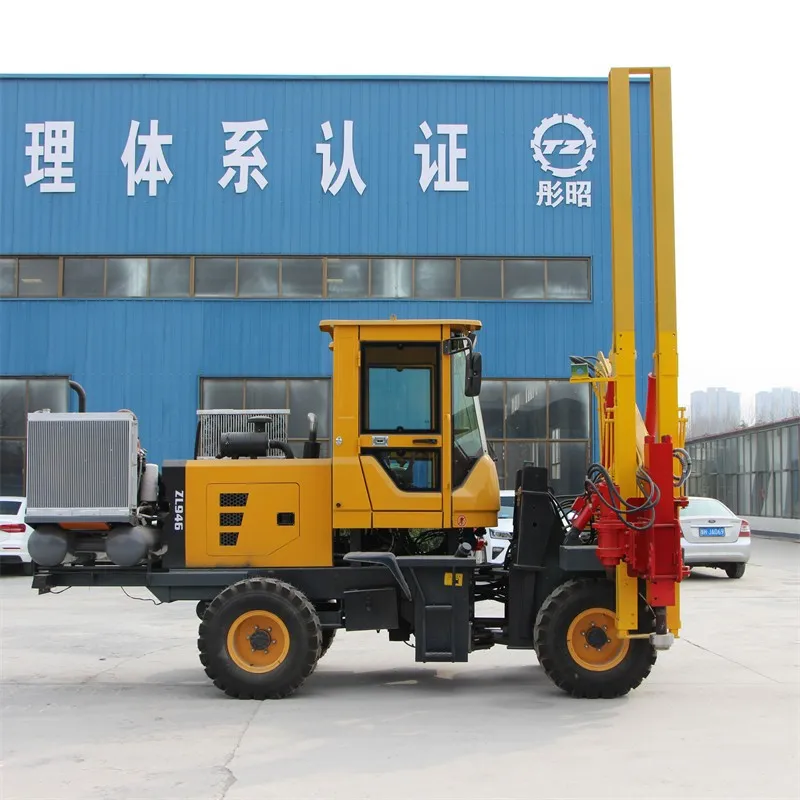
If you are in the market for a high - quality piling machine, we invite you to explore our Crawler Guardrail Piling Machine. We also offer other types of piling machines, such as the Guardrail Post Piling Machine and the Wave Shaped Guardrail Piling Machine.
Contact us to discuss your specific requirements and start your next piling project with confidence.
References
- Geotechnical Engineering Handbook, by Braja M. Das
- Construction Equipment for Civil Engineers, by S. K. Duggal