

In the mining and tunneling industries, the efficiency and safety of operations largely depend on the proper functioning of roadway drilling rigs. Real - time monitoring of the working parameters of these drilling rigs is crucial for ensuring optimal performance, preventing breakdowns, and enhancing safety. As a roadway drilling rig supplier, I understand the significance of this process and would like to share some insights on how to achieve real - time monitoring.
Understanding the Key Working Parameters
Before we delve into the monitoring methods, it's essential to identify the key working parameters of a roadway drilling rig. These parameters include:
- Drilling Depth: This indicates how far the drill bit has penetrated into the rock or soil. Monitoring the drilling depth helps in determining if the rig is reaching the desired target and can also provide insights into the geological conditions.
- Drilling Speed: The speed at which the drill bit rotates and advances is a critical parameter. It affects the efficiency of the drilling process and can also impact the wear and tear of the drill bit.
- Thrust Force: The force applied to the drill bit to push it into the material is known as the thrust force. Maintaining the appropriate thrust force is essential for efficient drilling and preventing damage to the drill bit.
- Torque: Torque is the rotational force applied to the drill bit. It is necessary to ensure that the drill bit can cut through the material effectively. Monitoring torque can help detect any blockages or abnormal resistance during drilling.
- Hydraulic Pressure: Roadway drilling rigs often rely on hydraulic systems to power various components. Monitoring the hydraulic pressure is crucial for ensuring the proper functioning of these systems and preventing leaks or malfunctions.
- Temperature: The temperature of the drill bit, hydraulic fluids, and other components can rise during operation. Monitoring the temperature helps in preventing overheating, which can lead to component failure.
Methods of Real - Time Monitoring
Sensor - Based Monitoring
One of the most common methods of real - time monitoring is the use of sensors. These sensors can be installed on different parts of the drilling rig to measure the various working parameters. For example:
- Depth Sensors: These sensors can be attached to the drill rod to measure the drilling depth accurately. They work based on principles such as ultrasonic or laser technology.
- Speed Sensors: Speed sensors can be used to measure the rotational speed of the drill bit and the advancement speed of the rig. They can be optical or magnetic sensors, depending on the application.
- Force Sensors: Force sensors, such as load cells, can be used to measure the thrust force and torque applied to the drill bit. These sensors convert the mechanical force into an electrical signal, which can be monitored and analyzed.
- Pressure Sensors: Hydraulic pressure sensors are installed in the hydraulic system to monitor the pressure. They can detect any changes in pressure, which may indicate a leak or a malfunction in the system.
- Temperature Sensors: Temperature sensors, such as thermocouples or infrared sensors, can be used to monitor the temperature of critical components. They can provide early warnings of overheating, allowing for timely maintenance.
The data collected by these sensors is then transmitted to a central monitoring system, where it can be analyzed and displayed in real - time. This system can be a computer - based system or a dedicated monitoring device.
Wireless Monitoring Systems
Wireless monitoring systems offer several advantages over traditional wired systems. They eliminate the need for extensive wiring, which can be cumbersome and prone to damage in the harsh environment of a mining or tunneling site. Wireless sensors can be easily installed on the drilling rig, and the data can be transmitted wirelessly to a central monitoring station.
These systems use technologies such as Wi - Fi, Bluetooth, or ZigBee to transmit the data. They can also be integrated with cloud - based platforms, allowing for remote monitoring and access to the data from anywhere in the world. This is particularly useful for companies with multiple drilling rigs operating in different locations.

Remote Monitoring and Control
In addition to real - time monitoring, remote monitoring and control systems can be used to manage the drilling rig from a distance. These systems allow operators to adjust the working parameters of the rig, such as the drilling speed, thrust force, and torque, without being physically present at the site.
Remote monitoring and control systems use a combination of sensors, communication technologies, and software to enable this functionality. They can also provide alerts and notifications to the operators in case of any abnormal conditions or malfunctions. This helps in reducing downtime and improving the overall efficiency of the drilling operations.
Benefits of Real - Time Monitoring
Real - time monitoring of the working parameters of a roadway drilling rig offers several benefits:
- Improved Efficiency: By monitoring the drilling speed, depth, and other parameters, operators can optimize the drilling process and reduce the time required to complete a project.
- Enhanced Safety: Monitoring the temperature, hydraulic pressure, and other safety - related parameters helps in preventing accidents and ensuring the safety of the operators.
- Reduced Maintenance Costs: Early detection of abnormal conditions or malfunctions allows for timely maintenance, which can prevent major breakdowns and reduce the overall maintenance costs.
- Better Decision - Making: Real - time data provides operators with valuable insights into the performance of the drilling rig, enabling them to make informed decisions about the operation and maintenance of the rig.
Our Roadway Drilling Rigs and Monitoring Solutions
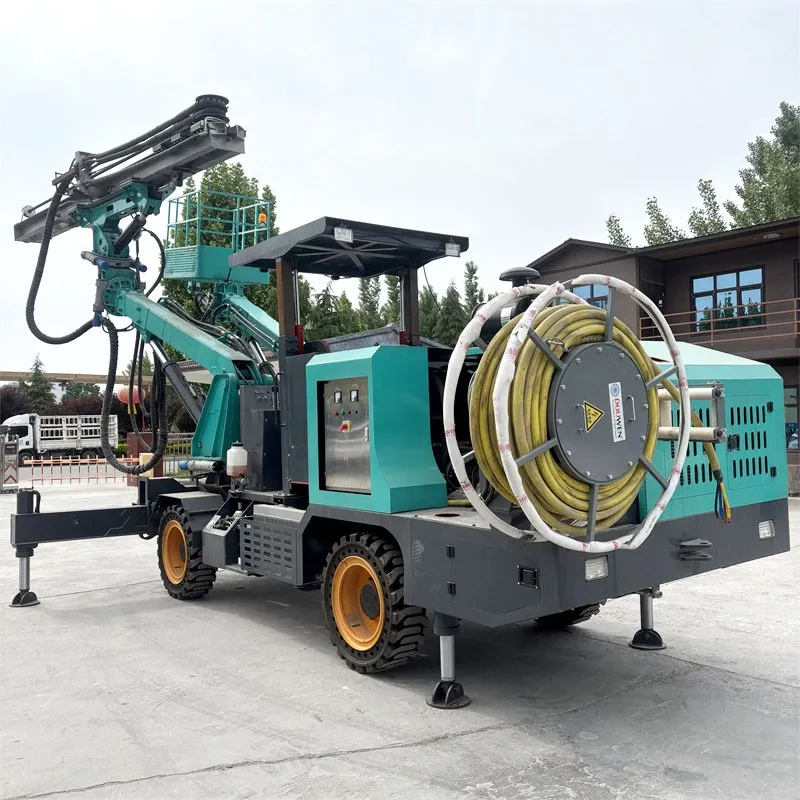
As a roadway drilling rig supplier, we offer a range of high - quality drilling rigs, including Double Boom Tunnel Drilling Rig, Roadway Drilling Rig, and Single Boom Tunnel Drilling Rig. Our drilling rigs are equipped with advanced sensor - based monitoring systems that allow for real - time monitoring of the key working parameters.
We also provide wireless monitoring solutions and remote monitoring and control systems to ensure that our customers can manage their drilling operations efficiently and safely. Our team of experts is always available to provide technical support and assistance in implementing these monitoring solutions.
If you are in the market for a roadway drilling rig or are looking to upgrade your existing monitoring system, we invite you to contact us for a detailed discussion. Our sales team will be happy to provide you with more information about our products and services and help you find the best solution for your needs.
References
- Smith, J. (2018). "Advanced Monitoring Techniques for Drilling Rigs". Mining Technology Journal, 25(3), 45 - 52.
- Johnson, A. (2019). "Wireless Sensor Networks for Real - Time Monitoring in Mining". International Journal of Mining and Minerals, 32(2), 67 - 74.
- Brown, C. (2020). "Remote Monitoring and Control of Drilling Rigs: A Case Study". Tunneling and Underground Space Technology, 45, 103 - 112.